Why Does Tent Abandonment Continue to be an Issue for Music Festivals.
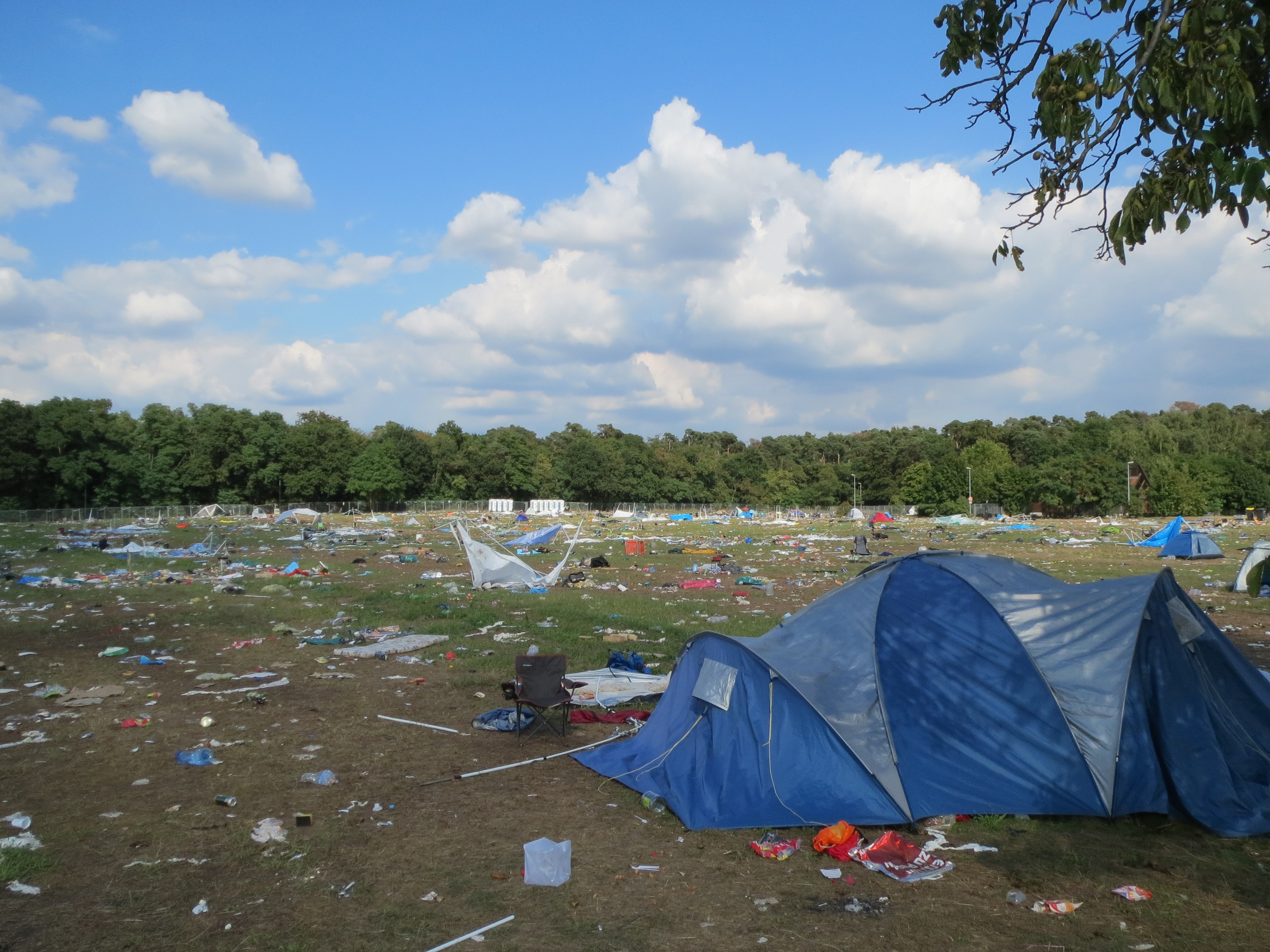
Despite a huge effort by festival organisers and non-profit organisations the abandonment of tents at the end of a multi-day outdoor festival continues to be an issue. The clean-up costs can be significant with an impact on sustainability credentials too. What is driving this continued problem and is there more that organisers can do to bring it under control.
Large scale multi-day music festivals with camping facilities continue to face a mounting problem of abandoned tents at the end of the festival despite years of awareness campaigning by organisers. The end of the summer 2026 festival season in Europe and North America has shown that the problem continues and, in some cases, has become worse. Non-profit organisations suggest that in the UK alone some 250,000 tents are abandoned at festivals each year generating an estimated 900 tonnes of waste. Due to damage and recycling complexities, most of these end up in landfills. What is driving these issues?
Low Costs and Convenience.
With an influx of low-quality imported tents, many retailers can offer extremely low-cost products which can be perceived as disposable by buyers. These single skin tents often sell for as little as $20 and are marketed as ‘festival tents’ and invariably have a high failure rate due to poor quality materials and manufacturing processes. These tents can easily be damaged or broken by high winds and heavy rain making reuse impossible rendering them useless to take home after an event. Non-profit organisations suggest that as many as 25% of festvial-giers purchase a tent specifically for one festival with no intention of keeping it. In addition to tents, the associated camping gear is increasing too and includes cheap chairs, sleeping bags, and airbeds, for example.
Charitable Contribution Myth.
Many festival-goers still perceive that leaving a tent on a festival site is a charitable act because they will be donated and given a second life to someone who needs it. This attitude continues to persist amongst festival-goers where they believe that their abandoned tent will be collected by charities and donated to homeless shelters or given to refugees. Obviously, this is a complete myth because most abandoned tents are dirty, incomplete, or damaged, making them useless with the only solution to incinerate them or send them to landfills. Organisations involved in reuse campaigns have repeatedly said that the majority of abandoned tents require significant labour before they can be donated, and many are unsuitable altogether.
Peer Pressure and Social Acceptance.
When a festival-goer sees others leaving tents behind on a site, the behaviour appears acceptable leading to the normalisation of all waste disposal this way. This peer pressure leads to festival-goers feeling no guilt about leaving tents, camping gear and other litter on a site at the end of the event because the majority of their peers are doing the same. In some cases, festival-goers may feel that they have paid a high price for tickets and camping pitches and think that this includes the clean-up costs post event.
Travel Logistics and Psychology.
Another factor driving tent abandonment is the travel logistics where lugging around a tent is considered inconvenient. This is less of a problem for festival-goers who used their own car but with many organisers encouraging travel by train, bus or coach the extra hassle of packing and carrying muddy, wet and heavy camping gear is considered unnecessary. In addition, many public transport carriers have strict luggage limits with additional charges for bulky luggage items like tents or camping gear. At the end of a multi-day event many festival-goers are exhausted suffering from sleep deprivation, high physical exertion and alcohol consumption, often leaving them hungover. This physical state and psychological fatigue lead many to choose the easiest option when departing a site where packing down a wet muddy tent and fitting it back into a carrying bag is considered a high-friction task. They would prefer to gather their personal possessions and leave as soon as possible rather than take responsible action.
Potential Solutions for Organisers.
Despite numerous awareness campaigns and initiatives by non-profit organisations the issue of abandoned tents and camping gear continues. Organisers are considering alternative approaches to eliminate this problem with one of the most popular solutions being to pre-erect tents in a structured dedicated zone. Contractors supply higher quality reusable tents which they erect before the event and remove at the end. There is a cost to this approach, much of which can be passed onto festival-goers but it needs to be weighed against the cost of dealing with hundreds of abandoned tents. Some organisers have introduced a camping pitch refundable deposit scheme which is returned once the festival-goer demonstrates that they have removed their tent to take home. Alternative camping options can include limiting festival-goers to a rental model where they collect their tent on entrance, erect it themselves and return it at the end of the festival, sizable deposits are often used to encourage appropriate behaviour.
For festival organisers planning their next event using a software management platform like Festival Pro gives them all the functionality they need manage every aspect of their event logistics. The guys who are responsible for this software have been in the front line of event management for many years and the features are built from that experience and are performance artists themselves. The Festival Pro platform is easy to use and has comprehensive features with specific modules for managing artists, contractors, venues/stages, vendors, volunteers, sponsors, guestlists, ticketing, site planning, cashless payments and contactless ordering.
Image by WikimediaImages via Pixabay
<< Back to articles
Contact us
Get in touch to discuss your requirements.
US: +1 424 485 0220 (USA)
UK: +44 207 060 2666 (United Kingdom)
AU: +61 (2) 8357 0793 (Australia)
NZ: +64 (0)9887 8005 (New Zealand)